For years my breakfast was a bowl of cereal, or toast and jam, or nothing at all followed by a coffee I described as breakfast. By eleven I was ravenous. By three I was making decisions about biscuits that I then narrated to myself as a personal failing.
It was not a willpower problem. It was a breakfast problem.
Thirty grams of protein before 9am is the single change that shifted the most for me, and it is the one I would pick if you could only do one thing on this entire site.
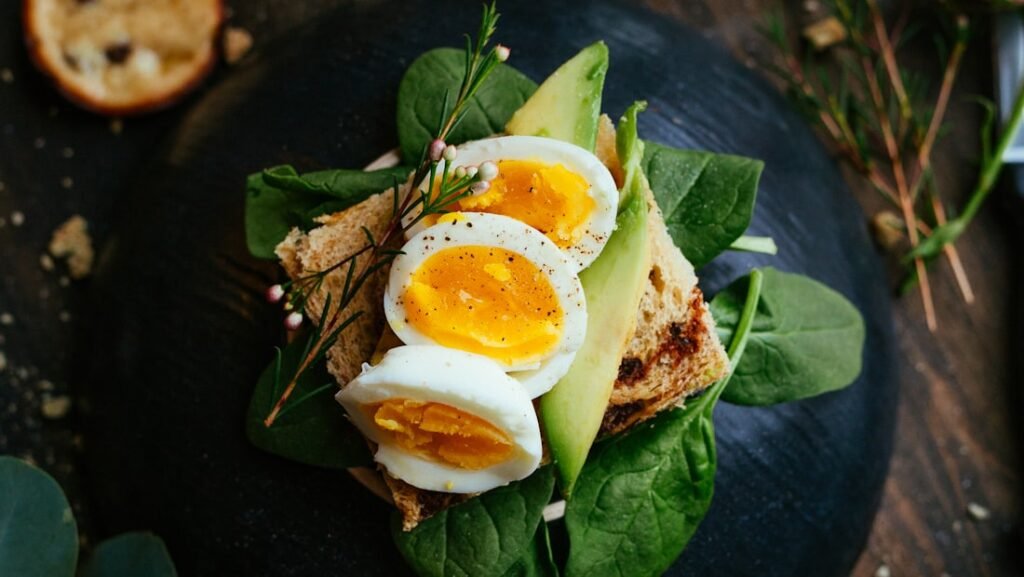
What a protein-led breakfast actually does
Evidence: Moderate to strong. Higher-protein breakfasts have been shown to reduce post-meal glucose responses, increase satiety hormones, and lower subsequent energy intake later in the day.
There is also a genuinely interesting effect called the second-meal phenomenon: what you eat at breakfast measurably changes how your body handles lunch. A protein-forward first meal flattens the glucose response to the meal that follows it, hours later.
So breakfast is not just one meal out of three. It sets the shape of the day.
Why thirty grams specifically
The number comes from muscle protein synthesis research, where roughly 25 to 30 grams in a sitting appears to be the point at which the response is reliably triggered in most adults. It is a useful, memorable target rather than a magic threshold.
What matters more is that most of us are starting from around eight to twelve grams and do not realise it. A bowl of porridge with milk is maybe twelve. Two slices of toast with peanut butter, around ten. Coffee is zero, however sincerely it was intended.
Thirty grams is roughly three eggs plus a slice of cheese, or 200 g of Greek yoghurt with a scoop of protein powder, or a decent fillet of fish. It is more than most people assume.
Eight options that take under five minutes
Greek yoghurt, 200 g, with seeds and berries. Around 20 g. Add a spoon of protein powder or a boiled egg on the side to close the gap.
Three eggs, any format. Around 18 g. Add cheese or smoked salmon and you are there.
Cottage cheese on rye with tomato and pepper. Around 25 g and genuinely nicer than it sounds.
A protein shake with milk and a banana. Around 30 g and requires no cooking, which on some mornings is the entire point.
Smoked salmon and cream cheese on a bagel thin. Around 22 g.
Last night’s dinner. Around whatever it was. Eating dinner food at breakfast is legal and no one is coming.
Tofu scramble with spinach. Around 20 g, and a solid plant-based option.
Skyr with nut butter stirred through. Around 25 g, takes ninety seconds.
What if breakfast makes you feel sick
This is common and it is not you being difficult. Morning cortisol suppresses appetite in a lot of people, and if you have spent years not eating breakfast your hunger signalling has adapted around that.
Start at fifteen grams. Liquid is easier than solid, so a shake or a yoghurt drink often goes down when a plate will not. Give it two weeks — appetite signalling usually recalibrates faster than you would expect.
What this is not
This is not a weight-loss instruction, and adding protein without removing anything is fine. It is not a reason to buy an expensive powder, though one can be convenient. And it is not a rule you have failed if you have toast on a Sunday.
The goal is a flatter glucose curve and a 3pm that does not feel like a hostage situation.
Questions people actually ask
Is thirty grams too much protein for one meal?
No. The old idea that the body can only use around 20 g at a time has not held up well; the evidence suggests protein is used efficiently across a much wider range. Thirty grams is a normal portion, not a megadose.
Do I need protein powder?
No, but it is convenient. Whey or a plant blend both work. Treat it as a fast food rather than a supplement — it is doing the same job as chicken, just quicker.
What if I do intermittent fasting?
Then this applies to your first meal, whenever that lands. Worth knowing that prolonged fasting raises cortisol in some women and can worsen cycle irregularity, so it is not automatically the right tool if you have PCOS.
Will this fix my afternoon crash on its own?
Often it makes a noticeable dent within a week. If it does not, look at whether lunch is carbohydrate-heavy and whether you are sleeping enough — both feed the same crash.
Pair this with meal sequencing and you have covered the two highest-return food habits. Both sit in step two of the four-step path.
Where this comes from
- PubMed — high-protein breakfast and glycaemic control
- PubMed — second-meal phenomenon
- British Nutrition Foundation — protein
Links open in a new tab. Where a claim rests on a small or mixed body of evidence, that is stated in the text above.