Every PCOS account tells you to eat more protein. Almost none of them say how much, which leaves you either guessing or working from a number a bodybuilding forum invented in 2009, quite possibly by someone called Chad.
So: how much protein for PCOS, in actual grams, based on what the research supports rather than what sells powder. It is more than you are eating. It is also less than the internet implies.
How much protein for PCOS: the number
Aim for 1.2 to 1.6g of protein per kilogram of body weight per day. Evidence: Moderate. For a 70kg woman that is roughly 85 to 110g daily.
The official minimum — around 0.75g per kilogram in UK guidance — is the amount required to prevent deficiency. That is a floor, not a target, and it was never designed as an optimum for insulin sensitivity, satiety or maintaining muscle.
Above about 1.6g per kilogram, the returns flatten for most purposes short of serious athletic training. There is no need to chase 200g, and a great deal of marketing depends on you believing otherwise, and a great deal of marketing has done extremely well out of it.
Why it matters more with PCOS
Insulin response. Protein has a far smaller effect on blood glucose than carbohydrate, and eating it alongside carbohydrate blunts the rise. Relevant to almost everyone with insulin resistance, diagnosed or not.
Satiety. Protein is the most filling macronutrient by a clear margin, which quietly reduces the 4pm situation without requiring any resolve.
Muscle. Muscle is where most glucose gets disposed of. Protein plus resistance training is the combination with the best evidence for improving insulin sensitivity, and neither works nearly as well alone.
Most people are not short on daily protein by a small amount. They are short at breakfast by about 25 grams, and fine by dinner.
Spread it out
Evidence: Moderate. Muscle protein synthesis responds better to 25 to 40g spread across three or four meals than to 15g, 15g and then 70g at dinner. The typical British day is heavily back-loaded.
Which is why thirty grams before 9am is the single highest-yield change here. Get breakfast right and the rest usually follows without much thought.
What 30g actually looks like
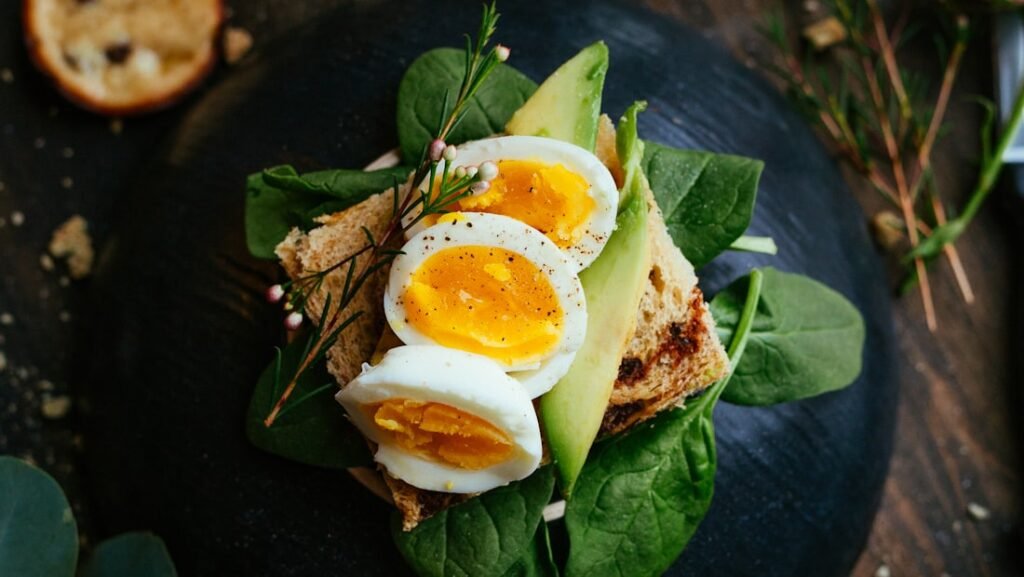
Four eggs. Or three eggs plus a slice of cheese.
200g Greek yoghurt with a tablespoon of nut butter and seeds. Roughly 25 to 30g, and it takes ninety seconds.
A tin of tuna, or 120g chicken, or 150g tofu. Leftovers from dinner count as breakfast — there is no rule against it.
Two slices of toast with peanut butter is about 12g. It feels like a protein breakfast and is mostly not one.
Lentils, beans and chickpeas deliver 8 to 9g per 100g cooked, plus fibre. If you are plant-based, combine sources across the day and aim toward the upper end of the range, since plant proteins are digested slightly less efficiently.
Do you need a powder?
No, but it is a reasonable convenience rather than a moral failing. Whey and soy are both well studied; collagen is not a complete protein and is a poor choice if the goal is muscle.
Buy plain, check that a serving delivers 20g or more, and treat it as a tool for the days when cooking is not happening. Food first, because food brings fibre and micronutrients along with it. See also: omega-3s, food first.
One caution
If you have reduced kidney function, high protein intakes need medical guidance rather than a blog. And if tracking grams starts to feel compulsive or distressing, stop counting and work with your GP or a dietitian instead — the number is meant to be a rough steer, not a daily exam.
Questions people actually ask
How much protein should I eat a day with PCOS?
Roughly 1.2 to 1.6g per kilogram of body weight, which is about 85 to 110g daily for a 70kg woman. Spreading it across three or four meals works better than concentrating it at dinner.
Is too much protein bad for you?
In people with healthy kidneys, intakes in this range are well tolerated in the research. Very high intakes offer little additional benefit and usually displace fibre-rich foods.
Can I hit this on a plant-based diet?
Yes, using legumes, tofu, tempeh, seitan, soy yoghurt and seeds. Aim toward the higher end of the range and vary your sources across the day.
More in the nutrition section.
Where this comes from
- British Nutrition Foundation — Protein
- PubMed — protein distribution across meals
- PubMed — higher protein intake and insulin sensitivity in PCOS
- British Dietetic Association — Protein food fact sheet
Links open in a new tab. Where a claim rests on a small or mixed body of evidence, that is stated in the text above.