Here is a thing that sounds too simple to matter, and then turns out to matter quite a lot: you can eat exactly the same meal, with exactly the same calories, and get a measurably smaller blood sugar spike purely by changing the order you put it in your mouth.
No food removed. Nothing banned. No app.
I ignored this for about two years because it sounded like the kind of tip that gets passed around wellness accounts with a sparkle emoji. Then I read the actual studies, tried it for a month, and stopped needing a biscuit at 3pm. Which was annoying, because I had built a personality around needing a biscuit at 3pm.
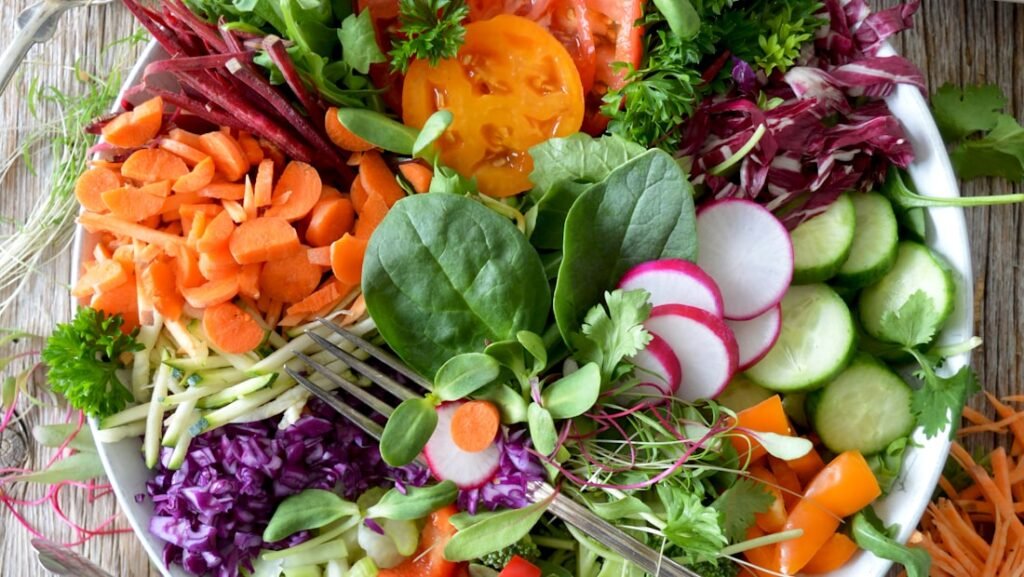
What meal sequencing actually is
The order is: vegetables and fibre first, protein and fat second, starch and sugar last.
That is the whole thing. If your plate has salad, chicken and rice on it, you eat the salad, then the chicken, then the rice. Ideally with a minute or two between them, though even loosely following the order does most of the work.
The evidence, graded honestly
Evidence: Moderate, and unusually consistent. Several small controlled studies have fed people identical meals in different orders and measured what happened afterwards. The pattern repeats: eating vegetables and protein before carbohydrate produces lower post-meal glucose peaks and lower insulin responses than eating the same meal carbohydrate-first.
Most of this work has been done in people with type 2 diabetes or prediabetes rather than specifically in PCOS, which is a real limitation and I am not going to pretend otherwise. But the mechanism is about digestion rather than about the condition, and insulin resistance is insulin resistance.
The effect sizes are meaningful rather than miraculous. Nobody is claiming this replaces medication.
Why the order changes anything
Three things happen when fibre and protein arrive first.
Fibre slows the exit. It forms a viscous layer that slows how quickly your stomach empties into your small intestine. Carbohydrate that arrives gradually gets absorbed gradually.
Protein and fat trigger the brakes. They stimulate gut hormones including GLP-1, which further slows gastric emptying and tells your pancreas to prepare rather than panic.
The starch arrives to a prepared system. Instead of hitting an empty stomach and being rushed through, it turns up last, into a slowed pipeline.
You are not eating less. You are eating it in a different order.
Why this matters more if you have PCOS
Insulin does two jobs you care about here. It moves glucose out of your blood, and it stimulates your ovaries to produce androgens while lowering sex hormone binding globulin, the protein that keeps testosterone bound and quiet.
So every avoidable insulin spike is a small, avoidable androgen nudge. Do that three times a day for a decade and it adds up. Flattening the curve is not only about energy, though the energy is what you will notice first.
If the mechanism is new to you, insulin resistance without a diabetes diagnosis explains why your glucose test can look perfectly fine while this is happening.
How to do it without thinking about it
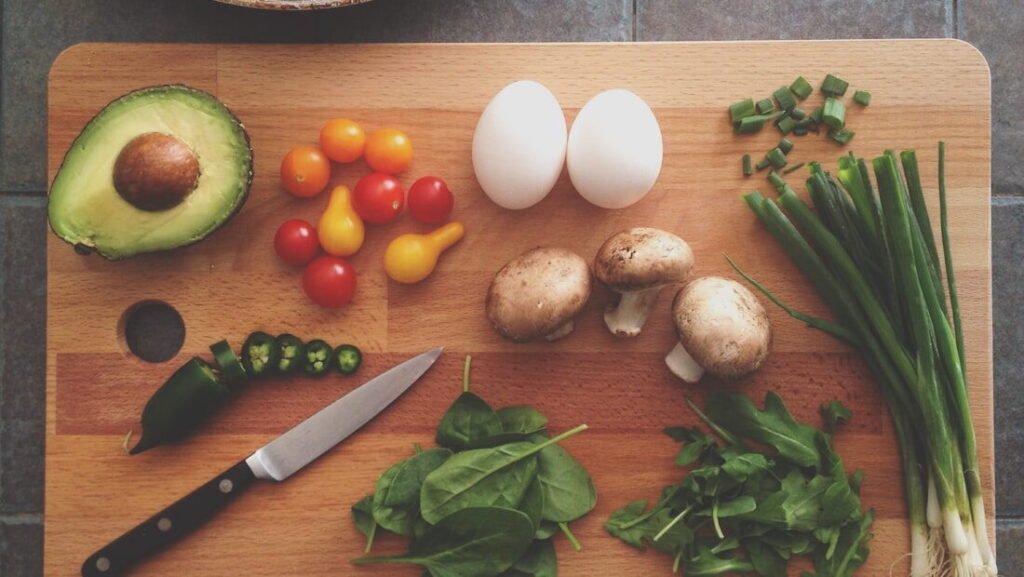
Serve vegetables as a first course. Not a whole separate ceremony — just put the salad out while the rest is still cooling, and eat it standing up if that is the reality of your kitchen.
Order a starter. At restaurants, a vegetable or protein starter does the job automatically and requires no explanation to anyone at the table.
Put the carbs on a side plate. Physically separating them removes the fork-hovering decision.
Front-load the sandwich. If lunch is a sandwich, eat the filling side first, or add a handful of leaves and eat those before the first bite. Somewhat undignified in an office kitchen, but so is a 3pm biscuit.
Where it does not apply
Soups, stews, curries and smoothies are already mixed, and you cannot un-mix them. Do not let this become a reason to stop eating soup. The sequencing effect is a bonus on meals where components are separate, not a rule that governs everything.
Also: if you are pregnant, managing type 1 diabetes, or on glucose-lowering medication, changes to how you eat should be run past your clinician rather than a blog.
What to pair it with
Two habits stack extremely well with this one. A protein-led breakfast, which sets the tone for the whole day, and a ten-minute walk after your largest meal, which pulls glucose into muscle without needing insulin to do it.
If you only remember two things: vegetables before starch, and walk after dinner. Both are free, and both work on the first day you try them.
Questions people actually ask
Do I need to leave a gap between courses?
The studies that found the largest effects used gaps of around ten minutes. In real life, simply eating in the right order without a stopwatch captures most of the benefit. Do not let perfect timing become the reason you abandon it.
Does it work if I am not eating a classic plate?
Partly. Anything where components are separable works — a curry with rice on the side, a sandwich you can open, a bowl you can eat in sections. Fully blended foods like smoothies and soups do not sequence.
Will this help me lose weight?
That is not the goal here and it is not what the research measured. Meal sequencing is about flattening glucose and insulin responses. Steadier energy and fewer cravings are the outcomes to watch for.
How long before I notice anything?
Cravings and afternoon energy often shift within a week or two, because those are downstream of the glucose curve you just changed. Cycle changes, if they come, take considerably longer.
More of the same approach, in the order I would actually do it, is in the nutrition section and the four-step path.
Where this comes from
Links open in a new tab. Where a claim rests on a small or mixed body of evidence, that is stated in the text above.